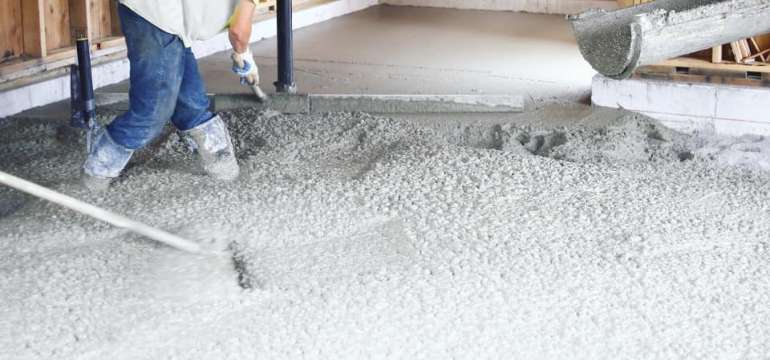
Helping your concrete slab dry faster is critical in today’s fast-paced construction market. The quicker your concrete dries, the sooner you can move on to the next building phase. The best things you can do to help concrete dry faster include:
- Mix concrete with the correct amount of water
- Enclose the concrete to protect it from the elements
- Add a high amount of cement (but this could lead to more cracking)
- Use synthetic aggregates that don’t absorb water
- Don’t add sealing, curing or bond-breaking additives
Is Concrete Drying The Same As Curing?
Drying and curing are different concepts when it comes to concrete. Curing is the process of hardening. Most curing will be done after 28 days, but concrete continues to harden over many years.
Drying is the process of water leaving the concrete slab. One way to estimate concrete drying time is for each inch of thickness, the slab needs 30 days of drying. Drying time depends on the conditions around the concrete, such as air temperature and humidity.
A concrete slab can be cured but still contain excess moisture. The only way to know how much water is in a concrete slab is by concrete moisture testing.
How Concrete Dries
When you first pour concrete, tiny tunnels form inside it called capillaries. Moisture in the concrete turns into vapour, and the vapour escapes from the concrete through the capillaries.
If you put a floor coating onto the concrete before enough water vapour evaporates, the flooring can fail. Testing the moisture content and relative humidity of concrete before applying any flooring helps ensure the flooring will be successful.
The relative humidity of a concrete slab should be at or below 75 percent before any floor coating is put down. The relative humidity is tested by the ASTM F2170 in-situ probe method.